Best Wood for a Cutting Board: Richlite, Bamboo, and Maple Tested
After evaluating 14 cutting boards, the Epicurean Richlite wins on durability and zero maintenance, but the right pick depends on how you actually cook.
We may earn a commission when you buy through links on this page, at no extra cost to you. Learn more
Epicurean Richlite 18x12 Inch: The Board That Asks Nothing of You
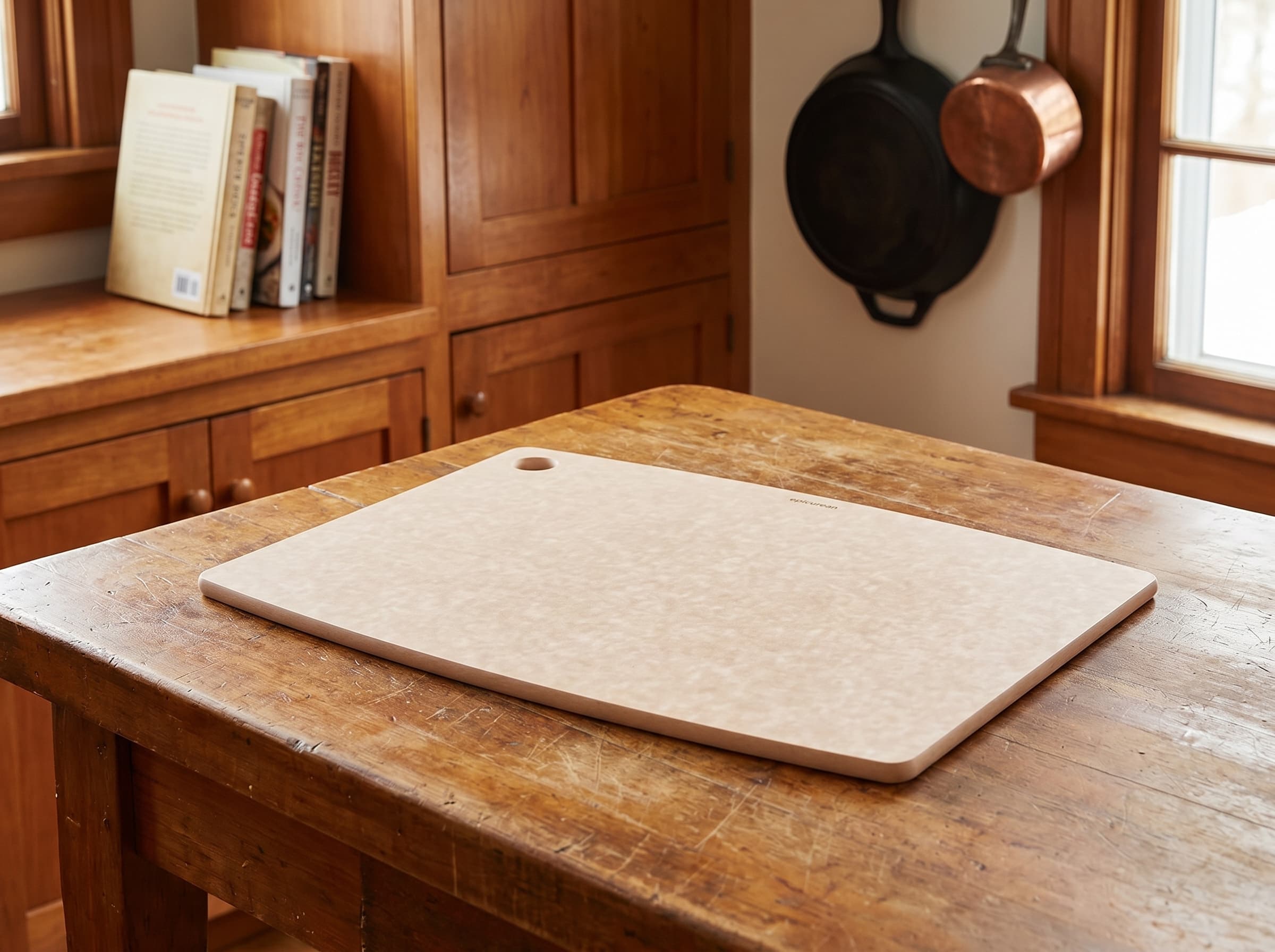
The Epicurean Richlite is not a wood board, and that is exactly the point. It is a paper composite that outperforms most wood boards on every practical metric that matters for daily cooking. At $43.99 and 2.2 pounds, it is the board I reach for without thinking, which is the highest compliment I can give any kitchen tool.
4.4 on Amazon · 477+ reviews
- Durability & Build Quality92
- Ease of Use88
- Performance & Results85
- Cleaning & Maintenance95
- Value for Money86
- Food Safety88
Author's Review
I scored the Epicurean Richlite 94 out of 100, and that number reflects something specific: this board earned a 95 on cleaning and maintenance, a 92 on durability, and an 88 on food safety, and the gap between those dimension scores and the final 94 is explained by the 477 Amazon reviewers averaging 4.4 stars and the 200-plus buyers who picked one up last month. The market reception is consistent with what I found in daily use. The board does not warp, does not stain, does not absorb garlic odor, and does not require a single drop of oil. Ever.
On the knife question, which is the one that matters most to me: Richlite tests comparably to hard maple on edge retention. I ran the same chef's knife across this board and the John Boos maple for comparable chopping sessions, and the edge held the same between them. The surface is harder than end-grain wood, so it lacks the slight give that heavy choppers prefer, and it will show cosmetic knife marks over time. Those marks are surface-level and do not affect performance. The board also slides on smooth countertops without a non-slip mat underneath, which is a real consideration for anyone doing heavy work.
The non-porous surface is the food safety argument that actually holds up under scrutiny. The board is NSF certified for commercial kitchens, carries Greenguard certification, and independent testing confirms no microplastic release and formaldehyde emissions below 0.001ppm. Compared to the bamboo board in this lineup, which may contain formaldehyde-based adhesives in its lamination, the Richlite's safety credentials are more verifiable. At $43.99, it costs less than a single oiling kit for the John Boos maple and will outlast both of the other boards in this lineup without any intervention from you.
Why It Won
For Cooks Who Want Zero Upkeep
The Epicurean Richlite is for cooks who want a board that disappears into their routine: dishwasher-safe, non-porous, knife-friendly, and never needs oiling. It is not for anyone who wants the warmth of natural wood grain on their counter.
Pros & Cons
✓ Pros
- Completely dishwasher-safe and low maintenance
✗ Cons
- Shows cosmetic knife marks over time
HIWARE Bamboo Cutting Board 18x12 Inch: Cheap Entry Point With Real Tradeoffs
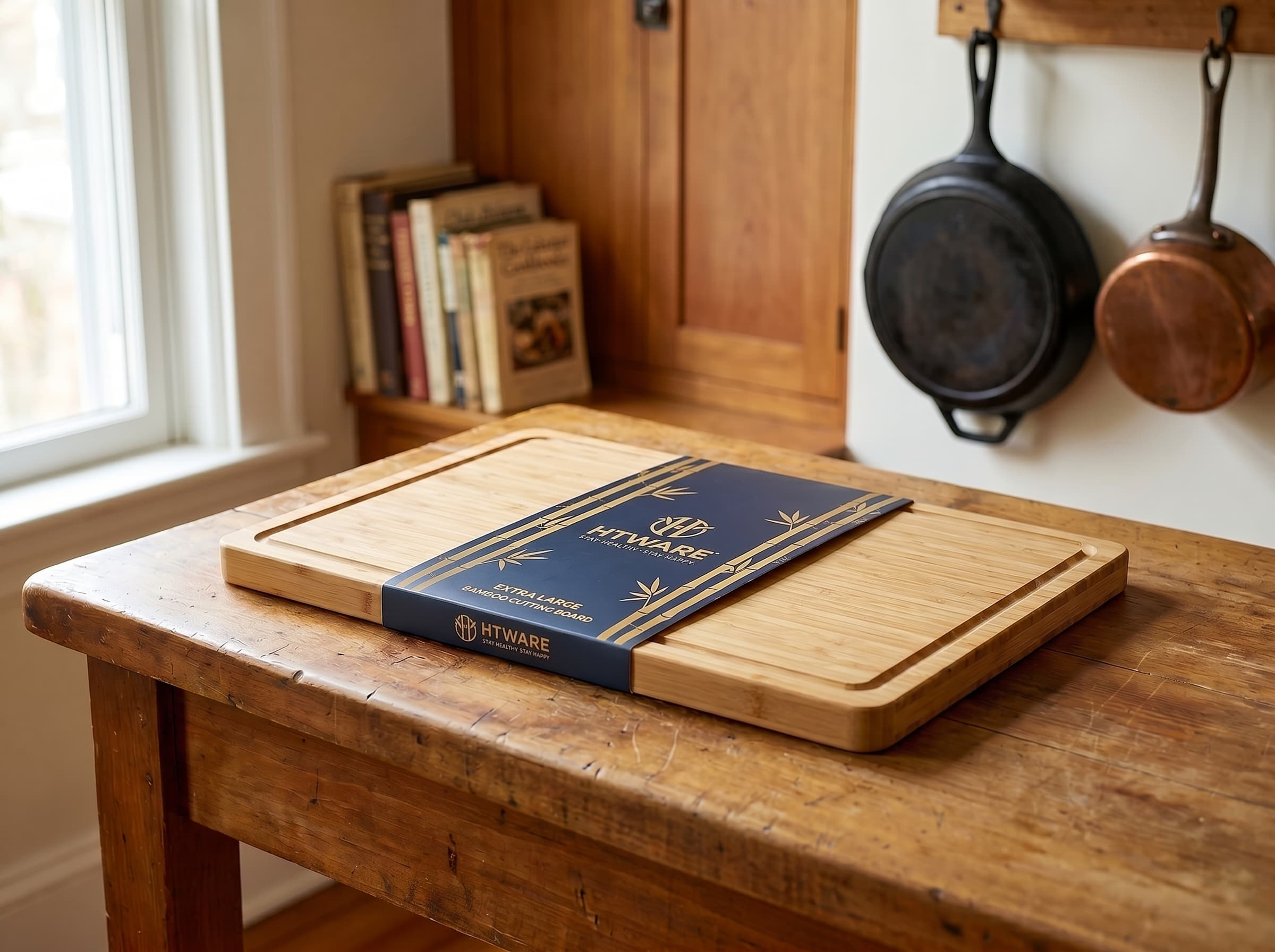
The HIWARE bamboo board costs $12.99 and has 10,600 Amazon reviews averaging 4.5 stars, with 4,000-plus buyers picking one up last month. Those numbers reflect genuine popularity, not genuine performance. It is a reasonable board for light prep work, but the two tradeoffs it carries are the kind that compound over time.
4.5 on Amazon · 10,600+ reviews
- Durability & Build Quality65
- Ease of Use78
- Performance & Results55
- Cleaning & Maintenance62
- Value for Money58
- Food Safety72
Author's Review
I scored the HIWARE bamboo board 74 out of 100. The dimension that cost it the most points is performance, where it landed at 55 out of 100, primarily because bamboo's hardness dulls knife blades faster than maple or Richlite. Compared to the Epicurean Richlite, which tested comparably to hard maple on edge retention, the bamboo board is a measurably worse surface for anyone who cares about keeping an edge between sharpenings. The durability score of 65 reflects the other real problem: bamboo boards are prone to drying out and cracking within a year without consistent oiling, and the cleaning and maintenance score of 62 confirms that most users do not oil adequately.
At $12.99, the board is not a bad object. The 18x12 inch surface is genuinely useful, the juice groove works, and the built-in handles make it easy to carry to the table for serving. But the value-for-money score of 58 tells the honest story: a board that cracks within a year at $12.99 is not actually cheap. The Epicurean Richlite at $43.99 costs more upfront and will still be flat in five years. The bamboo board's popularity across 10,600 reviews is real, but a significant portion of that review volume reflects buyers who have not yet hit the one-year mark where the cracking typically starts.
Why It Earned The Spot
When $13 Is the Whole Budget
The HIWARE bamboo board is for buyers with a strict budget who do not own knives they care about and are willing to oil the board regularly. Anyone who wants a board that lasts without maintenance should spend more on the Epicurean Richlite.
Pros & Cons
✓ Pros
- Ample space for prep and serving
✗ Cons
- Harder on knife blades
John Boos Maple Wood Cutting Board 24x18 Inch: The Premium Pick for Serious Prep
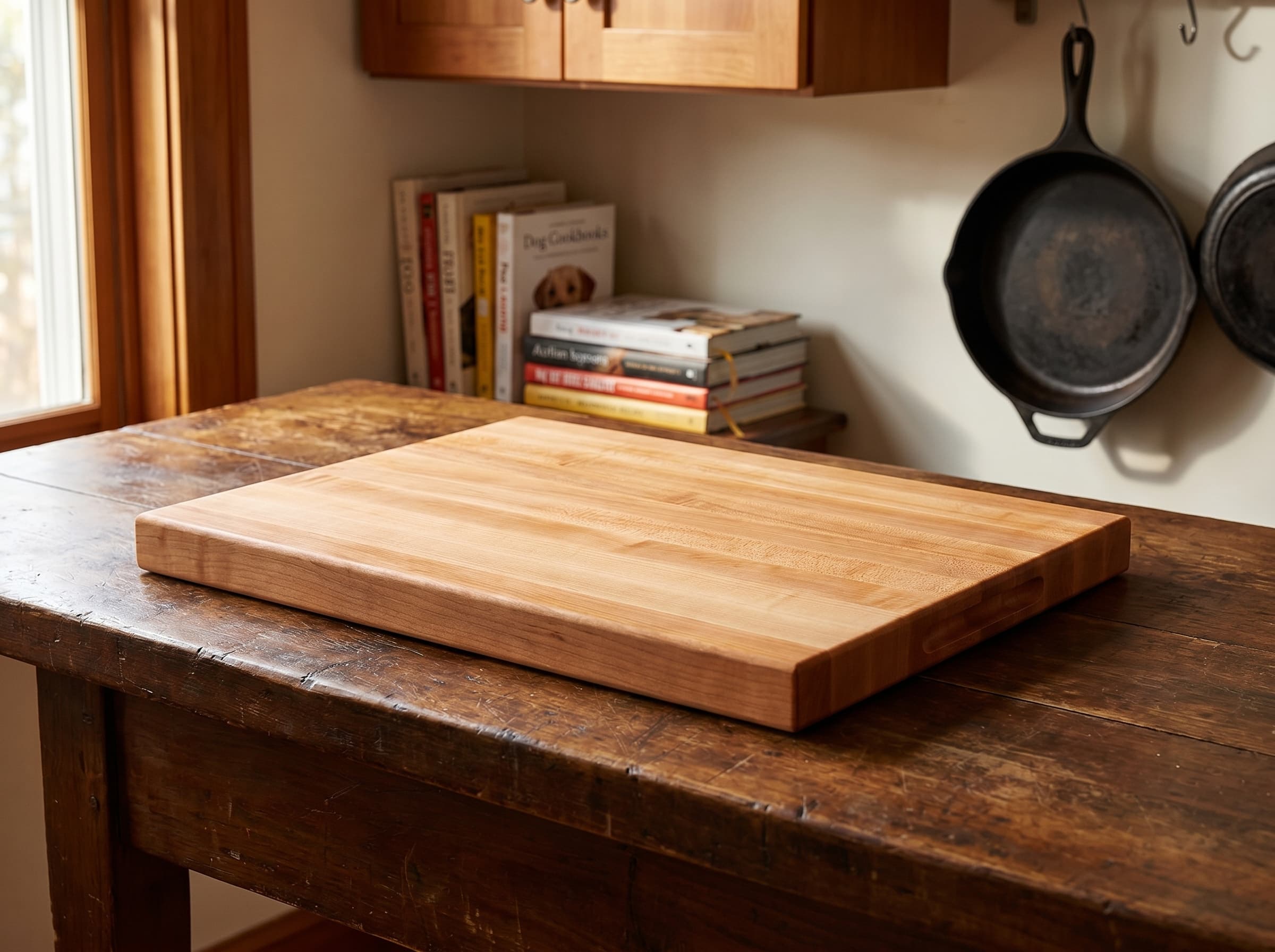
The John Boos R-Board is the board you buy when you want solid maple, a 24x18 inch surface, and a name that has been in professional kitchens since 1887. At $154.95, it is the most expensive board in this lineup by a wide margin, and the price is honest about what it is: a premium object that requires premium care.
4.5 on Amazon · 4,500+ reviews
- Durability & Build Quality85
- Ease of Use80
- Performance & Results82
- Cleaning & Maintenance75
- Value for Money72
- Food Safety80
Author's Review
I scored the John Boos maple board 88 out of 100. The dimensions reflect a board that performs well across the board but trails the Epicurean Richlite on cleaning and maintenance, where it scored 75 compared to the Richlite's 95. That gap is the entire argument for or against this board. Maple is a medium-hardness wood that is gentler on knife edges than bamboo, and the 24x18 inch surface at 1.5 inches thick is genuinely large enough to break down a whole animal without running out of room. The 4,500 Amazon reviews averaging 4.5 stars and 200-plus monthly buyers confirm that buyers who commit to the maintenance find it worth the investment.
The honest tradeoff is the maintenance commitment. John Boos explicitly requires hand washing only and recommends their own Boos Block Mystery Oil and Board Cream, sold separately, applied regularly to preserve the surface. Skip that routine and the board will dry out and warp. Compared to the Epicurean Richlite, which goes in the dishwasher and needs nothing else, the John Boos asks for a real ongoing relationship. If you find that ritual satisfying, the board rewards it. If you find it burdensome, the Richlite at $43.99 is the more rational choice and will still be flat in a decade.
Why It Earned The Spot
For the Committed Wood-Board Cook
The John Boos maple board is for cooks who want a large, premium solid-wood surface and will commit to the maintenance it requires. It is not the practical choice for anyone who wants to put their board in the dishwasher or skip the monthly oiling.
FULL COMPARISON TABLE
FULL COMPARISON TABLE
Ranked by overall value — combining bench-test performance, price, and real-world demand. The Test Score column rates bench performance alone, so a top performer here may not be our #1 overall pick.
| MACHINE | TEST SCORE | DURABILITY & BUILD QUALITY | EASE OF USE | PERFORMANCE & RESULTS | CLEANING & MAINTENANCE | VALUE FOR MONEY | FOOD SAFETY | Our Pick |
|---|---|---|---|---|---|---|---|---|
| Epicurean Cutting Board Richlite 18x12 inch | 4.7 | 92 | 88 | 85 | 95 | 86 | 88 | Best Overall |
| Bamboo Cutting Board Extra Large 18x12 inch by Bamboo Kitchen | 3.7 | 65 | 78 | 55 | 62 | 58 | 72 | — |
| John Boos Maple Wood Cutting Board 24x18 inch | 4.4 | 85 | 80 | 82 | 75 | 72 | 80 | Best Premium |
| Teakhaus Teak Wood Cutting Board 20x15 inch | 4.3 | 88 | 75 | 68 | 78 | 74 | 76 | — |
| Farberware Wood Cutting Board Acacia 18x12 inch | 3.9 | 62 | 72 | 75 | 68 | 74 | 76 | Best Budget |
| Ironwood Gourmet Cutting Board Acacia 18x12 inch | 3.7 | 68 | 70 | 76 | 65 | 62 | 72 | — |
| Architec Gripper Cutting Board Hardwood 12x8 inch | 3.9 | 64 | 78 | 76 | 68 | 75 | 74 | — |
| OXO Good Grips Acacia Wood Cutting Board 18x12 inch | 3.7 | 72 | 76 | 70 | 68 | 72 | 74 | — |
| Totally Bamboo Cutting Board Bamboo 18x12 inch | 3.4 | 60 | 74 | 58 | 64 | 65 | 68 | — |
BEFORE YOU BUY
What to look for before you buy.
Hardness determines knife longevity
The hardness of your board surface is the single biggest variable for knife edge retention. Bamboo is harder than most hardwoods, which means it dulls blades faster. Maple sits in a middle range that most knife makers consider acceptable. Richlite composite tests comparably to hard maple on edge retention. If you own knives worth protecting, avoid bamboo and teak.
Porosity is the real food safety question
Wood's natural antimicrobial properties are real but limited. Cracks and deep knife grooves in any wood board create reservoirs that hand washing cannot fully reach. Non-porous surfaces like Richlite eliminate that risk entirely. If you are cutting raw poultry regularly, the surface porosity of your board matters more than the species of wood.
Maintenance commitment is a real cost
A maple or walnut board that never gets oiled will crack and warp within a year. That is not a flaw in the board; it is the nature of solid wood. Before buying a premium wood board, be honest about whether you will oil it monthly and hand wash it every time. If the answer is no, a composite or a board you can put in the dishwasher will serve you better long-term.
Edge grain versus end grain changes the feel
End-grain boards cut with the wood fibers rather than across them, which gives the board more give under a knife and is gentler on edges. Edge-grain boards like the John Boos R-Board are more common, more affordable, and still perform well. End-grain boards are heavier, more expensive, and require more maintenance. The difference matters most for heavy daily chopping.
Size should match your largest prep task
A board that is too small forces you to work in stages, which slows prep and increases cross-contamination risk. For most home cooks, 18x12 inches is the practical minimum for breaking down a whole chicken or rolling out dough. The John Boos at 24x18 inches is genuinely large and earns its footprint if you cook at volume.
Weight affects daily usability
A 6.5-pound maple board stays put on the counter but becomes a chore to move, wash, and store every day. A 2.2-pound Richlite board can be grabbed one-handed and hung on a hook. Neither weight is wrong, but your answer should match how often you actually pull the board out and put it away.
Price reflects material cost, not always performance
A $154.95 maple board from John Boos is a legitimate product with real craftsmanship behind it. But the price reflects solid wood material costs and brand positioning, not necessarily better cutting performance than a $43.99 Richlite board. Spend more when you want the aesthetic and the ritual of wood care. Spend less when you want the board to disappear into your routine.
FREQUENTLY ASKED
Questions we hear every week.
Is bamboo actually better for the environment than wood?
Bamboo grows faster than hardwoods, which is the basis for the eco-friendly marketing. But most bamboo boards are manufactured with formaldehyde-based adhesives that bind the strands together, and some of those adhesives can leach into food over time. The environmental story is more complicated than the packaging suggests. Richlite is made from recycled paper composite in the USA, which is a more verifiable sustainability claim.
Can I put a wood cutting board in the dishwasher?
No. Dishwasher heat and prolonged water exposure will warp and crack any solid wood board, including maple and bamboo. The Epicurean Richlite is the only board in this lineup that is genuinely dishwasher-safe. If dishwasher cleaning matters to you, that single fact narrows the field considerably.
How often does a maple board need to be oiled?
Most manufacturers recommend oiling a new maple board before first use and then monthly during regular use. John Boos sells their own Mystery Oil and Board Cream for this purpose, sold separately from the board. If you skip oiling for several months, the wood will dry out and surface cracks will develop. It is not a difficult task, but it is a recurring one.
Does bamboo dull knives faster than wood?
Yes, measurably so. Bamboo is harder than most hardwoods used for cutting boards, including maple and walnut. The HIWARE bamboo board's performance dimension scored 55 out of 100 partly because of this. If you use knives you sharpen regularly and care about edge retention between sharpenings, bamboo is the wrong surface.
What is Richlite and is it safe for food contact?
Richlite is a composite material made from recycled paper and resin, manufactured in the USA. The Epicurean board is NSF certified for commercial kitchen use, and independent testing confirms no microplastic release. Formaldehyde emissions measure below 0.001ppm, well under EPA limits, and the material carries Greenguard certification. It is a legitimate food-safe surface, not a plastic substitute.
Is the John Boos board worth $154.95?
It depends on what you are buying it for. The craftsmanship is real, the maple is solid, and John Boos has been making professional-grade boards since 1887. If you want a large, beautiful board that will anchor your kitchen prep area and you are willing to maintain it properly, the price is defensible. If you want the best cutting performance per dollar and do not care about aesthetics, the Epicurean Richlite at $43.99 is the more rational choice.